Login
Login Screen Reader Access
 - Copy.jpg )
Government Shakambhar P.G. College, Sambhar Lake, Jaipur (NAAC B Grade)
Government Shakambhar P.G. College, Sambhar Lake, Jaipur (NAAC B Grade)
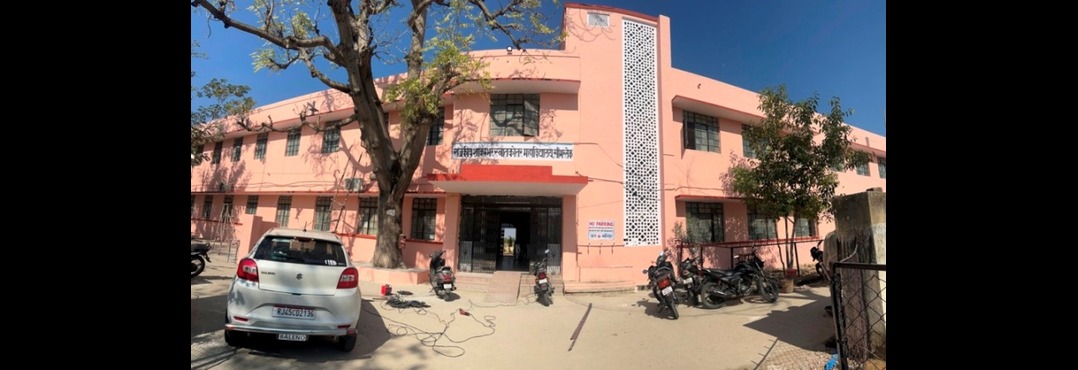
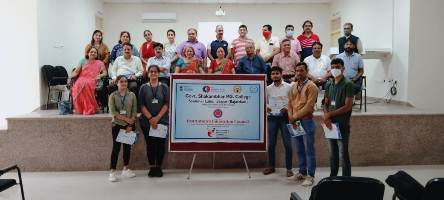
Government Shakambhar Post Graduate College, Sambhar Lake, is a distinguished institution of higher education in Rajasthan committed to academic excellence, social responsibility, and the holistic development of its students. The college derives its name from Goddess Shakambhari Mata, the revered Kuldevi of the Chauhan dynasty, whose blessings are believed to guide and inspire the institution. Historically, Sambhar served as the capital of the Chauhan rulers, which lends the town considerable cultural and historical significance. The region is also known for its rich religious heritage, including the famous Shakambhari Mata Temple, Devyani Sarovar, and several other sacred sites that attract devotees and visitors throughout the year.
Sambhar Lake is well connected by rail and road networks. The town lies on the Jaipur–Jodhpur railway line, with Phulera Junction serving as the nearest railway station, located approximately 6 kilometres away. Sambhar is situated about 70 kilometres from Jaipur, the capital city of Rajasthan, and nearly 100 kilometres from Ajmer, which is renowned for the shrine of Khwaja Moinuddin Chishti.
The college campus spreads over an area of approximately 118 Bigha 5 Biswa, providing ample space for academic and infrastructural development. The institution has developed a well-structured academic infrastructure consisting of 20 classrooms, 6 laboratories, and 2 conference halls. The classrooms are well furnished to facilitate effective teaching, while the laboratories are adequately equipped and maintained to support practical learning and research activities.
The college was established in the academic session 1969–70 with undergraduate programmes. Over the years, the institution has steadily expanded its academic offerings. Postgraduate classes in EAFM under the Faculty of Commerce were introduced in 1994–95, followed by postgraduate programmes in Political Science under the Faculty of Arts and ABST and Business Administration under the Faculty of Commerce in 1996–97. At present, postgraduate programmes in Geography, Physics, Botany, and Zoology are also offered under the Self-Financing Scheme (SFS), thereby broadening the scope of higher education available to students in the region.
Currently, the college serves more than 2,000 students, reflecting its significant role as an educational institution catering to the educational needs of the surrounding region. The institution is supported by over 25 dedicated faculty members, including Professors, Associate Professors, and Assistant Professors. The faculty members are highly qualified, experienced, and committed to maintaining high academic standards. Several faculty members are recognized as research supervisors by the University of Rajasthan, Jaipur, and many research scholars have successfully completed their Ph.D. degrees under their guidance.
The college has made significant progress in strengthening its infrastructure with financial assistance under the Rashtriya Uchchatar Shiksha Abhiyan (RUSA) scheme, through which it received a grant of ₹2 crore. This support facilitated the construction of a modern auditorium with a seating capacity of 250, along with two smart classrooms equipped with advanced teaching technologies. Out of the total grant, approximately ₹1.60 crore was utilized for construction and renovation works, while ₹40 lakh was invested in the procurement of academic and infrastructural resources.
In terms of sustainable development and resource management, the college maintains its own open well for water supply and has recently installed a solar power system in collaboration with Rajasthan Electronics and Instruments Limited (REIL). These initiatives reflect the institution’s commitment to environmental sustainability and responsible resource utilization.
The college actively supports students from economically weaker sections through a variety of scholarships and welfare schemes sponsored by the Government of Rajasthan. These include the Post-Matric Scholarship, Chief Minister Higher Education Scholarship, Medhavi Chhatra Scholarship, Kalibai Bheel Medhavi Chhatra Scooty Yojana, Devnarayan Scooty Yojana, and several other student support initiatives that encourage access to higher education and academic achievement.
The college library serves as a vital academic resource centre with a collection of more than 25,000 books, along with a range of journals, magazines, and reference materials available for students and faculty members. The library also provides access to DELNET resources, and the process of semi-automation is currently underway to further enhance the efficiency and accessibility of library services.
The Department of Sports and Games actively promotes physical fitness, discipline, and sportsmanship among students. The college encourages participation in various sporting activities, and students regularly compete in inter-college, inter-university, inter-state, and national-level competitions. Many students have brought laurels to the institution by winning gold, silver, and bronze medals in different sporting events.
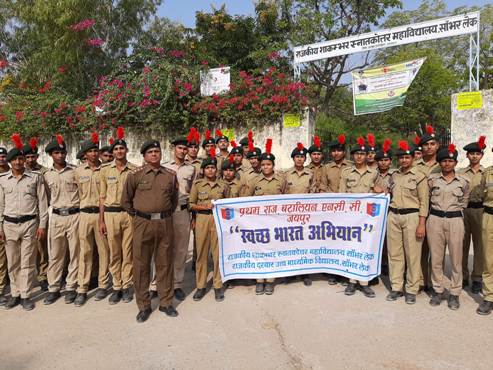
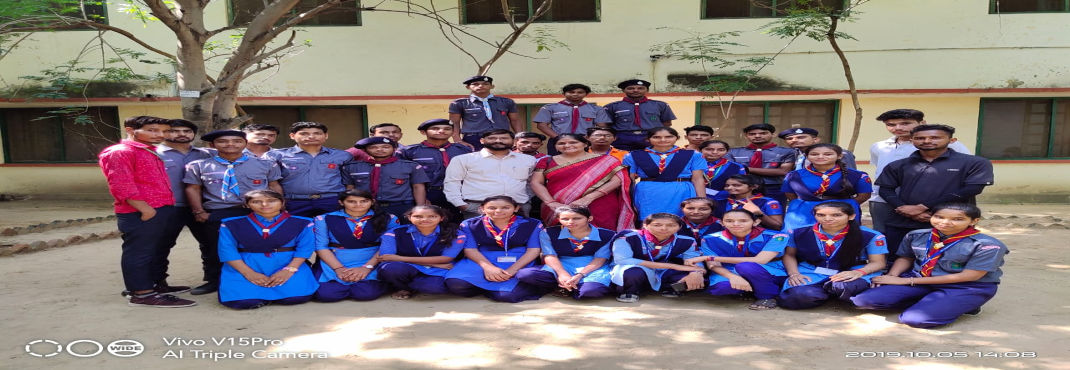
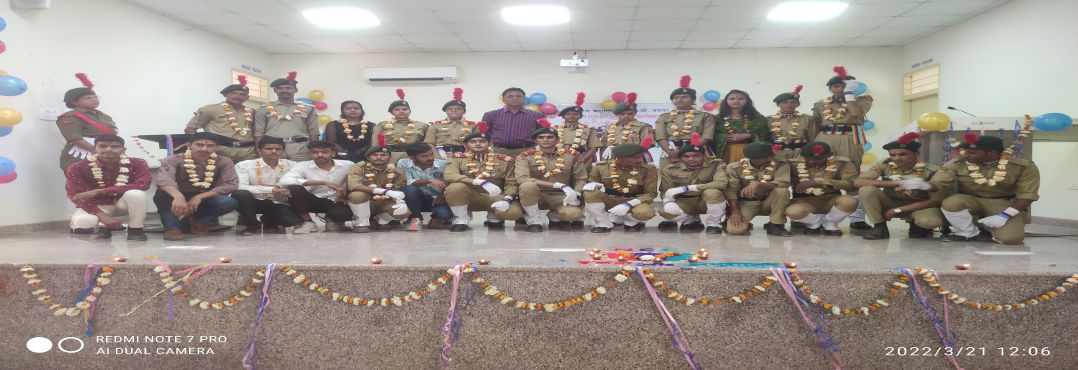
All academic programmes offered by the college are affiliated with the University of Rajasthan, Jaipur, ensuring adherence to recognized academic standards and curricula. Alongside formal education, the institution places strong emphasis on co-curricular and extension activities through programmes such as NCC, NSS, and Scouts. These initiatives play an important role in instilling discipline, patriotism, leadership qualities, social responsibility, and a spirit of community service among students.
Since 2020, the college has also incorporated the Anandam Programme into its curriculum. This initiative encourages students to connect with society, develop empathy, and cultivate a deeper understanding of social responsibilities through meaningful community engagement.
To further enhance student development and institutional effectiveness, the college operates several committees and cells, including the Institution’s Innovation Council (IIC), Women Cell, Career Counselling and Placement Cell, and Anti-Ragging Committee. These bodies play a vital role in promoting innovation, ensuring a safe and inclusive campus environment, and guiding students toward academic, personal, and professional growth.
Government Shakambhar Post Graduate College has successfully completed three cycles of accreditation by the National Assessment and Accreditation Council (NAAC). In 2005, under the leadership of Prof. R. C. Choudhary, the college was awarded a B+ Grade. Subsequently, in 2016, during the tenure of Prof. Kul Bhushan, the institution once again secured a B+ Grade. In 2024, under the dynamic leadership of Prof. D. C. Dudi, the college was accredited with a B Grade. The institution continues to progress steadily in terms of academic development, infrastructural enhancement, and quality assurance.
Furthermore, the college has adopted the National Education Policy (NEP) 2020 and is actively implementing its guidelines to strengthen the quality, flexibility, and relevance of higher education. Through its continued commitment to academic excellence, innovation, and community engagement, the college strives to empower students and contribute meaningfully to the educational and social development of the region.